

Six weeks out from the wedding, when the flowers are booked and the seating chart is almost done and you've finally stopped refreshing the weather forecast, there's usually one thing left on the list that nobody has touched. The vows.
I hear this from couples all the time, that they sit down, open a blank page, and just stop, usually because whatever they write suddenly seems like it won't be enough, like it has to be perfect, like everyone will be watching and judging every word. So before anything else, can I tell you something that actually helps? Your vows are for one person, standing close enough to see your hands shaking, who already loves you and is probably just as nervous as you are. Write to that person, and almost everything else sorts itself out.
The thing that makes vows actually work
Couples always worry they aren't good enough writers for this, and honestly, being a good writer has almost nothing to do with it.
The vows that stay with people, the ones couples pull out on anniversaries and read to each other again, tend to be the most specific rather than the most eloquent. There's a real difference between "you make me feel safe" and "you're the person I call when something goes wrong, and you always pick up," and while both say something true, only one of them belongs to you. The small details that would mean nothing to anyone else in that room, the habits and moments and particular ways your partner moves through the world, those are the things that make a room go quiet. Because everyone can feel when something is true, even without knowing the story behind it.
Where to start writing your wedding vows in Australia
The couples who find the writing easiest start somewhere small. A memory of when they knew, the quiet version rather than the grand romantic one. A phone call where something shifted. A morning that felt different. Write it down loosely, with no intention of using any of it in the final vows.
From there, the promises usually follow naturally, and the most memorable ones are nearly always the small and honest ones: "I promise to be the one who goes to get the car when it's raining," or "I promise I'll still find this funny in twenty years." Those land because they're real, and because they could only belong to one specific relationship.
An hour of unedited writing, with no pressure to finish anything, is genuinely all most people need to get started. The editing part is much easier than the starting part, and everything that doesn't belong falls away pretty quickly once you can see what you actually have.
On length, somewhere between one and two minutes when read aloud tends to feel right, roughly 150 to 250 words. Reading them aloud and timing yourself before the day is worth doing, because nerves have a way of making everything feel much longer than it is.
A loose structure that helps
Most vows follow the same loose shape: past, present, future. A memory or moment you knew, what this person means to you now, and what you're promising going forward. You don't have to follow it rigidly, but if a line feels like it doesn't quite fit anywhere, running it through that frame usually helps.
One thing worth doing early is a quick conversation with your partner about tone and roughly how long you're both going for. Content doesn't need to be shared, just the general feel of it, whether you're both going for something warm and sincere, or sincere with some humour woven through. It matters more than people expect, because there's a version of events where one person delivers something tender and quietly devastating while the other has been workshopping a thermostat joke for three weeks. Both are lovely. Together they can feel a little uneven, and a two-minute conversation beforehand is all it takes to avoid it.
One question that comes up a lot is whether to write vows together or separately. There's no rule, but most couples find that writing separately and sharing on the day feels more meaningful, there's something in the surprise of hearing words the other person chose entirely on their own. If you do write separately, the one conversation worth having beforehand is tone: whether you're both going warm and sincere, or leaving room for some humour. And if you're feeling stuck, sitting down together first to talk through memories and moments, then going away to write separately, gives you something to work from without making the vows feel like a joint project. The content can stay completely private until the ceremony.
The legal part, which is much simpler than it sounds
Australian marriage ceremonies require a specific set of words to be legally valid, and your celebrant handles all of this. The declaration each of you makes, a version of "I call upon the persons here present to witness that I take you to be my lawful wedded spouse," is something your celebrant walks you through, and your personal vows sit alongside it rather than replacing it. This means your personal vows can be written entirely without legal language in mind, which is a genuinely freeing thing to know early. Your celebrant takes care of the legal side; your only job is the part that means something to your partner.
Reading them on the day
The most useful thing you can do before the wedding is read your vows out loud, many times over, until they feel almost boring. Read them in the shower, to your mum, to a friend patient enough to sit with you for five minutes, until the words feel so worn in and familiar that emotion doesn't ambush you at the very first sentence. The couples who get through their vows most gracefully are almost always the ones who've rehearsed them enough that the words feel like something they've known forever, even when their voice is catching and their hands aren't quite steady.
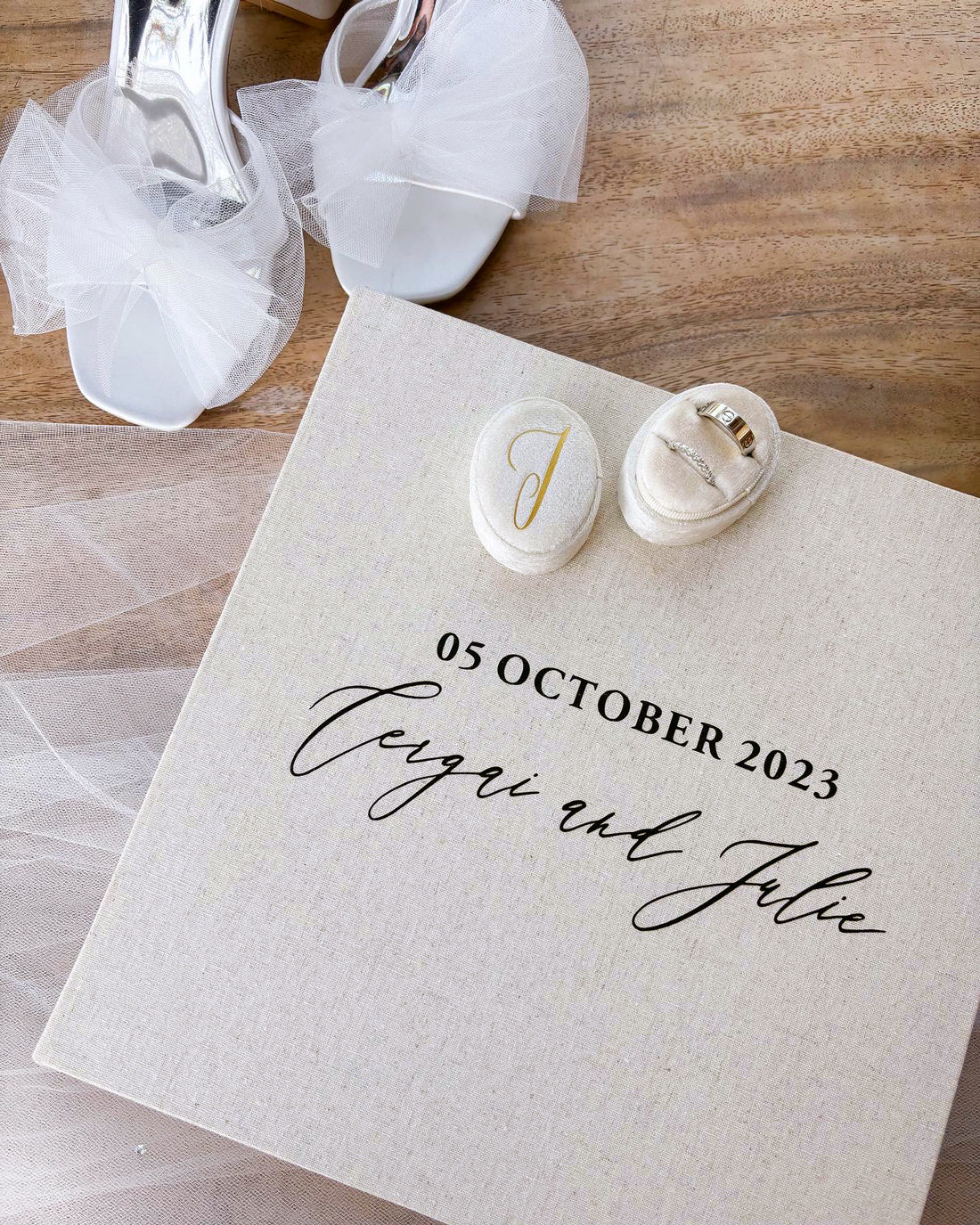
Having something considered to hold them in helps more than most people expect. Loose paper moves around, a phone screen dims, and when everything feels overwhelming there's something grounding about holding something substantial. Our wedding vow books can have your vows printed inside in a clean legible font, so you're not squinting at your own writing at exactly the wrong moment.
After the day
Something couples often mention later is that they didn't expect to go back and reread their vows, and then they always do, on the first anniversary, or when things are hard, or just on an ordinary evening when one of you thinks to take the book down from the shelf.
Write what's true, keep it specific to the two of you, and trust that what you know about this person is more than enough. It always has been.
Another keepsake worth thinking about for the ceremony is your wedding guest book - it captures the words of everyone who witnessed your vows.